
What Anthony Bourdain Still Teaches About Brand: Curiosity, Candor, and the Risk of the Bad Meal
65% say brands produce too much AI-generated content.
57% trust brand messaging less because of AI content.
41% vs. 20%: Unpaid voices influence trust more than brand messaging.
For founders and CMOs deciding what their brand should sound like when most of what buyers read now sounds the same.
On August 7, 2026, A24 opened Tony in six theaters in New York and Los Angeles. The film follows a 19-year-old Anthony Bourdain through the summer of 1975, when he took a kitchen job in Provincetown, Massachusetts, the stretch of his life he later wrote about in the opening chapters of Kitchen Confidential. That first weekend it earned just under $349,000, the highest per-theater average of any film in release, at $58,159 a screen. It went wide on August 21 and has since earned about $15.5 million in the United States and $19.5 million worldwide, according to The Numbers.
The reviews are worth reading closely, because they explain why the film worked. Critics did not praise it for making Bourdain admirable. They praised it for leaving him difficult, cocky, and unfinished, a young cook who had not yet earned the reputation the audience already knows. Variety's Owen Gleiberman wrote that a Bourdain film has to clear one bar, whether Bourdain himself would have liked it, and that this one does.
The film was only one part of the summer. Bourdain's two 1990s crime novels were reissued alongside it. On October 13, The Folio Society released a collector's edition of Kitchen Confidential with previously unseen photographs, priced at $130. And on October 29, The Lunch Lady, a noodle stall in Ho Chi Minh City whose broth Bourdain once called "pure magic" on camera, opens its first restaurant in the Philippines, after its Vancouver and Toronto locations each earned a Michelin Bib Gourmand.
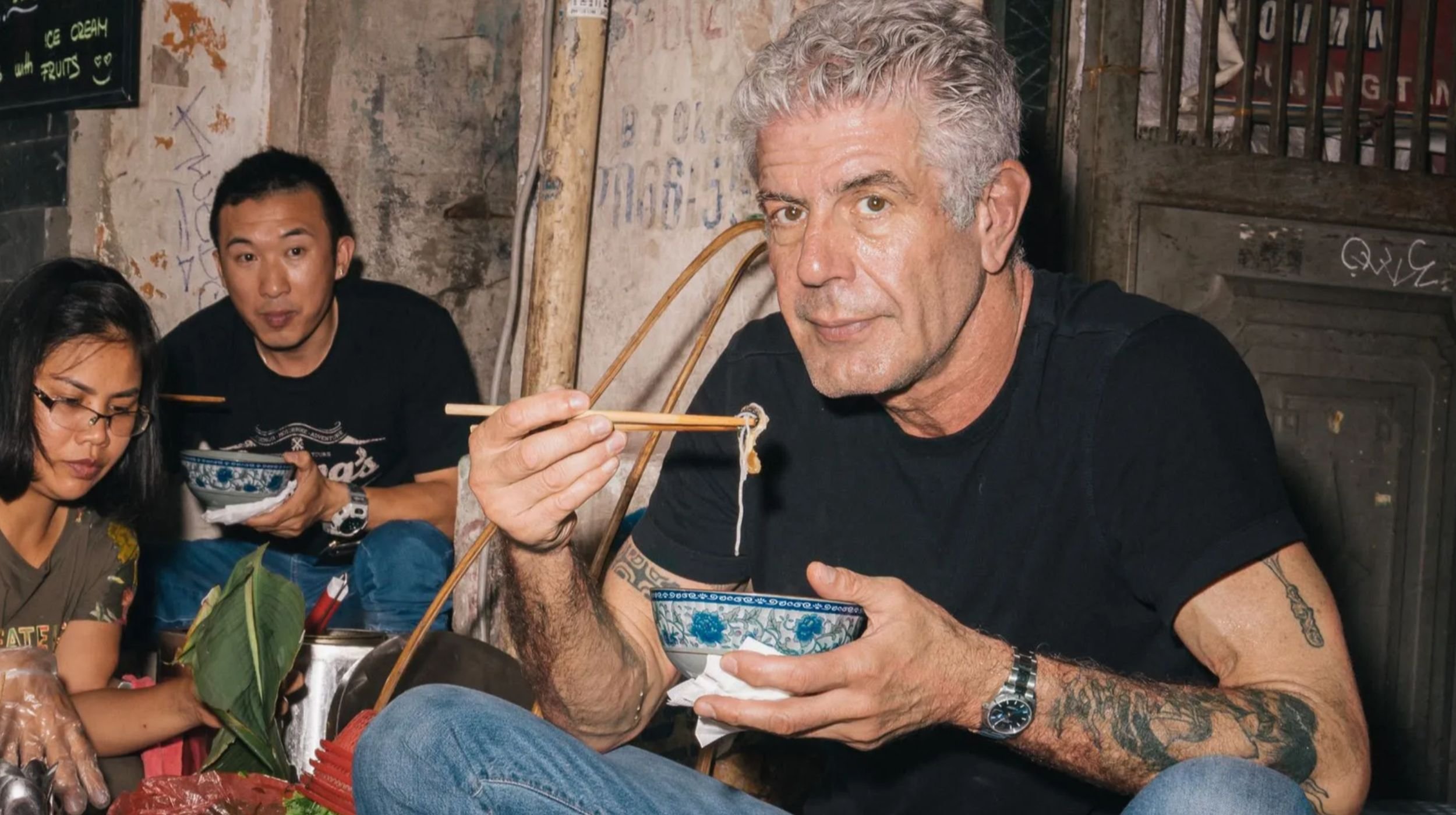
Bourdain died in 2018. Eight years later, his name is still filling theaters, selling $130 books, and carrying a family noodle business across an ocean. None of that came from a brand guideline, a tagline, or a content calendar that anyone has made public. It came from a body of work built on curiosity, candor, and real attention to other people, and that body of work is still doing the selling.
That is what a brand looks like when it is working.
Brand trust, 2026
Consumers say brands make too much AI content. They trust what other people say instead.
Two large studies from summer 2026, one US and one global, point the same way: twice as many people name unpaid voices as their top trust influence as name the brand’s own messaging.
| Finding | Figure | Source |
|---|---|---|
| Gartner · 1,006 US consumers, surveyed May to June 2026 | ||
| Consumers who say brands produce too much AI-generated marketing content | 65% | Gartner, September 22, 2026 |
| Consumers who say that content has made them less trusting of brand messaging | 57% | Gartner, September 22, 2026 |
| Consumers who now rely more on real people for shopping information and recommendations | 43% | Gartner, September 22, 2026 |
| Edelman Trust Barometer · 17,688 respondents in 15 countries, surveyed April to May 2026 | ||
| Consumers who call brand trust an important or critical purchase criterion, level with value (88%) and just behind quality (89%) | 88% | Edelman, June 2026 |
| Top trust influence: what unpaid people say about a brand, versus what the brand says about itself | 41% vs 20% | Edelman, June 2026 |
| Willing to keep using a brand that starts selling to people different from them: those who trust brands and find them relevant, versus those who do neither | 71% vs 36% | Edelman, June 2026 |
Edelman figures are from the 2026 Edelman Trust Barometer Special Report: Brand Growth in an Insular World. Gartner surveyed US consumers; Edelman surveyed people in 15 countries. Bars use the full 0–100% scale, with a mark at 50%; in paired figures, gold is the first value and grey the comparison.
Most brands are optimizing for polish while buyers are asking for proof
The research from the last four months points the same direction, and it is away from volume.
The common mistake is easy to understand. When content became cheap to produce, many teams treated output as the measure of brand health, and they filled their blogs, product pages, and social feeds with more of it. The buyers on the other end have noticed, and the most recent research suggests they are adjusting their trust accordingly.
In a Gartner survey of 1,006 U.S. consumers, conducted in May and June 2026 and published September 22, 65% said brands are producing too much AI-generated content in their marketing, and 57% said that content has made them less trusting of brand messaging overall. In the same survey, 43% said they now rely more on real people for shopping information and recommendations. Read together, these numbers describe buyers moving away from brand-produced volume and toward human voices, which is the space Bourdain occupied his entire career.
Edelman's 2026 Trust Barometer Special Report on brands, published in June and based on 17,688 respondents in 15 countries, adds a second piece. 88% of consumers said trusting a brand is an important or critical purchase criterion, nearly level with product quality at 89%. When asked what most shapes their willingness to trust, 41% pointed to what people who are not paid by the brand say about it, compared with 20% who pointed to what the brand says about itself. That gap matters, because it means the most persuasive material about your company may already be outside your control, in reviews, press, peer conversations, and recommendations.
Bourdain understood that dynamic long before it had a survey attached to it. The Lunch Lady never needed to describe her own broth. He described it, and that one sentence of earned praise traveled further than any menu copy could.
Current research on trust and brand voice
Brand trust research, summer 2026
Buyers trust people more than polish.
Two large studies from this summer point the same way, and it’s the direction Anthony Bourdain worked in his whole career.
Gartner survey of 1,006 US consumers, May to June 2026
Edelman Trust Barometer, 17,688 respondents in 15 countries, June 2026
Top influence on whether people trust a brand
- What unpaid people say about the brand 41%
- What the brand says about itself 20%
88% call trust in a brand an important or critical reason to buy, nearly level with product quality at 89%.
“If you don’t risk the bad meal, you’ll never get the magical one.”
Anthony Bourdain
All bars use the full 0–100% scale, with a mark at 50%. Gartner surveyed US consumers; Edelman surveyed people in 15 countries.
These are survey responses, so they describe stated attitudes and correlation rather than measured purchase behavior. They are still a consistent signal from two large, independent studies fielded within weeks of each other.
Four habits from Bourdain's work that hold up in 2026
Each habit has a reason behind it, and each one costs something.
The original version of this post listed seven qualities founders could take from Bourdain. On a second read, several of them overlap, so they are consolidated here into four habits, each with the reason it matters now and the tradeoff it carries.
1. Curiosity before conclusions. In Medium Raw, Bourdain wrote that without experimentation and a willingness to ask questions and try new things, "we shall surely become static, repetitive, moribund." For a brand, curiosity means asking your customers, your sales team, and your support inbox what is actually happening before you decide what to say. The reason this matters now is that buyers can tell the difference between content written from a keyword list and content written by someone who asked a question and listened to the answer. What you give up is speed, because asking takes longer than assuming.
2. Candor, including about what you do not know. Bourdain's credibility came from saying things other people in his industry would not say, about kitchens, about food media, and about himself. The Tony reviews make the same point from the other direction, since the film earned praise by refusing to polish its subject. For your brand, candor means stating the belief your company holds that a competitor would disagree with, and naming the limits of your product plainly. The tradeoff is that candor will lose you some prospects who wanted a softer answer, and it will keep the ones who were looking for a straight one.
3. Listening as the main work, with talking second. Bourdain's shows used the most ordinary shared experience, a meal, to let other people tell their own stories, and he built the larger narrative from what he heard. That is the closest historical model for how trust works in the Edelman data, where unpaid voices outweigh a brand's own claims about two to one. For your team, listening means treating customer interviews, reviews, and sales call notes as source material for your content, rather than as research that sits in a folder. The cost is that you share the stage, and some of the best lines in your marketing will belong to someone else.
4. Willingness to risk the bad meal. Bourdain's advice to travelers was to be open to experience and to stop being afraid of a bad meal, because, in his words, "If you don't risk the bad meal, you'll never get the magical one." For a brand, the bad meal is the post that does not perform, the opinion that draws pushback, or the format that you test and drop. The reason to accept that risk is that the safe, interchangeable content the Gartner respondents are tired of is exactly what you produce when you never take it. What you give up is the comfort of a clean dashboard every month.
"If you don't risk the bad meal, you'll never get the magical one." Anthony Bourdain
The tradeoffs, in plain terms
A voice built this way is slower to build and harder to replace.
It is worth laying out both sides before recommending this approach, because it is not free. On the gain side, you get a voice that buyers recognize, content that other people are willing to quote and repeat, and material that is very difficult for a competitor to copy, since it comes from your conversations and your beliefs. On the cost side, you publish less, you take more time per piece, and you accept that some pieces will miss. The main differentiator is durability. Polished, generic content tends to depreciate quickly, while a recognizable point of view tends to compound, which is the clearest lesson in Bourdain's name still selling books eight years after his death.
What this likely means over the next 6 to 18 months
AI search is likely to raise the value of what other people say about you.
AI search tools, meaning the chat assistants and AI-generated summaries that now answer many buyer questions before anyone clicks a link, assemble their answers from many sources at once. No one outside these companies knows exactly how each system weighs those sources, so any forecast here is an estimate. The most likely pattern, based on how these tools describe their own behavior, is that they draw on third-party mentions, reviews, interviews, and expert commentary alongside a brand's own pages. If that holds, the gap Edelman measured between earned and owned voices may widen in AI search, because the answer a buyer reads will often be built from what others say about you. Brands with a distinct point of view and a habit of earning mentions are in a better position for that shift than brands that publish the most.
If you want an outside read on how your brand currently shows up in AI search answers, Camino5 can review it with your team.
How to start today
Pull the last ten pieces your team published and mark each one where a reader could not tell, without the logo, that it came from you. That count is your starting baseline, and it tells you how much of your content is interchangeable.
Write down, in one sentence, a belief your company holds that a credible competitor would disagree with. If your team cannot agree on that sentence, resolve it before producing more content, because every piece downstream depends on it.
List every place people outside your company talk about you, including reviews, partner pages, press, podcasts, and community threads, and note who owns each one. This is the earned layer that buyers, and most likely AI search tools, weigh most heavily.
Choose three to five existing pieces and rewrite them using real customer language and your stated belief, then compare their performance against the originals before you change all seventy-five. Testing a small set first protects you from rolling out a voice that has not been proven with your audience. Treat the three-to-five number as a practical working threshold, not an official benchmark.
Give the rewritten pieces, along with your one-sentence belief, to someone on your team who did not write them, and ask whether they could produce the next piece in the same voice without help. If they can, the voice is documented well enough to scale. If they cannot, the voice still lives in one person's head.
Bourdain built a brand by making room at other people's tables, and eight years later, people are still pulling up a chair.
Sources
The Numbers, "Tony (2026)," box office data, accessed October 19, 2026
TheWrap, "Anthony Bourdain Biopic 'Tony' Headlines a Busy Indie Box Office," August 2026
Salon, "Bourdain's '90s gangster novels couldn't escape the kitchen," September 16, 2026
ComingSoon, Folio Society edition of Kitchen Confidential, October 12, 2026
Edelman, 2026 Trust Barometer Special Report: Brand Growth in an Insular World, June 2026
Anthony Bourdain, Medium Raw (Ecco, 2010)