
Social Selling and Search: How Creator Content Turns Into AI Search Visibility
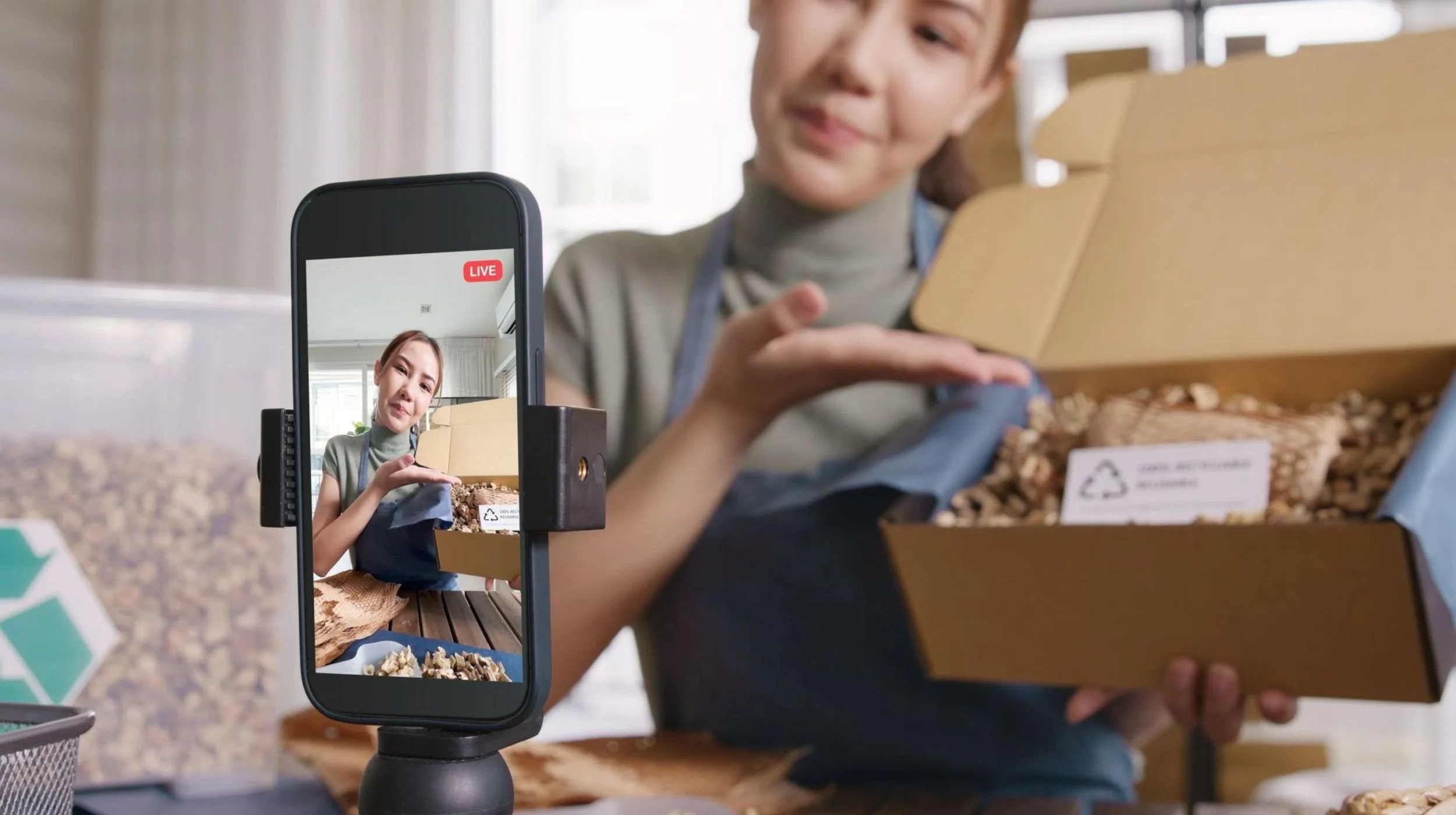
Social content sparks interest, while search and AI help shoppers compare products before buying.
Consistent product details, creator videos, and customer reviews can support visibility across search and AI.
Track branded search impressions and product page visits alongside social results to understand connections between channels.
A shopper sees a creator open a product on TikTok, and a few days later asks ChatGPT or Google whether it is worth buying. The answer depends on work your social team may never have connected to search. Social creates the interest, and search decides who gets the sale.
Social commerce is now large enough to plan around
Social is no longer a test budget. It is a sales channel big enough to need a plan for what happens after the video, not only during it.
$87.02 billion. US social commerce sales in 2025, up 21.5%, with more than $100 billion forecast for 2026. (eMarketer, December 2025)
$15.82 billion. TikTok Shop US sales in 2025, up 108.0%, or 18.2% of all US social commerce. (eMarketer, December 2025)
108.3 million. US social buyers age 14 and older in 2025. (eMarketer, December 2025)
These are forecasts, not measured results, but the direction is clear. Most brands still measure social on views and in-app sales and measure search on rankings and traffic, so the handoff between the two goes unmanaged. That handoff is where many social sales are won or lost.
Shoppers move between social, search, and AI in the same purchase
Shoppers discover on social, then check somewhere else before they buy. That check now happens in Google, in ChatGPT, or in both.
In our work with clients, we see people use ChatGPT, search, and social interchangeably, switching back and forth inside the same purchase, and each one affects the others. If you focus on one, you see about a third of the picture. The platforms are blending too. A YouTube Short or an Instagram post is now as likely to show up inside a ChatGPT answer as it is inside the app where it was posted.
41% of Gen Z go to social first when looking for information, ahead of search engines at 32% and AI chat tools at 11%. (Sprout Social, May 2025)
76% say social content influenced a purchase in the past six months. (Sprout Social, May 2025)
50% check reviews somewhere else before buying, and 47% return to the brand's website for more research. (Bazaarvoice, April 2025)
43% look for reviews or ratings after discovering a product, the most common next step. (Bazaarvoice, September 2025)
These are self-reported surveys that include shoppers outside the US, so treat them as a picture of behavior rather than an exact measure. They still point to the same moment, and this is where SEO and AI search take over. The answer a shopper gets depends on what your product pages and structured data say, and on whether search engines and AI models can find the reviews and videos that came out of social as mentions of your brand. If your site cannot confirm what the creator showed, the interest the video created may go to a competitor whose pages answer the question more completely.
AI answers are built from the content social produces
The videos, threads, and reviews that sell on social are the same material AI answers are built from. Social content does not stay on social.
When an AI tool answers a product question, it looks for confirmation from sources other than the brand itself. A product page tells the model what the brand claims. A creator video, a Reddit thread, or a set of reviews tells the model what real buyers experienced. AI models are prediction engines that work out which words are most likely to come next, so when many independent sources describe a product the same way, the model is more likely to repeat that description. Much of that independent material is created on social platforms, which is why social content now shapes AI answers as much as it shapes in-app sales.
15%. Wikipedia, YouTube, and Reddit were the most cited sources in Google’s AI summaries, together making up 15% of all sources listed. (Pew Research Center, July 2025)
45%. Among beauty and electronics buyers who said digital video played a role in their purchase, 45% said it helped them choose a product or brand. (Google and BCG, July 2025; commissioned by Google)
41% vs. 24%. Shoppers ages 18 to 34 who use generative AI for product search, compared with all consumers. (Bazaarvoice, September 2025)
Google and OpenAI both licensed Reddit’s data in 2024, so community discussion is a direct input to both. The shoppers most active on social are also the most likely to use AI search, so the person who watched the video is often the same person asking ChatGPT about it a few days later.
This changes how long a piece of social content stays useful. A creator video used to have a short life: it got its views in the first week, then faded. Now that same video, and the comments and threads it starts, can be pulled into AI answers months later, when a new shopper asks about the product for the first time. A Reddit thread from last year may be what ChatGPT quotes today. You do not control what people say in those places, but you can influence it. Give creators accurate product details, answer real questions where buyers ask them, and make sure your own pages say the same thing the best social content says. The goal is for the AI to find one consistent story about your product wherever it looks.
What GPT-6 means for brands that sell through social
GPT-6 leans heavily on community content, and it sends shoppers to the brand's own site to buy. Brands that sell mainly inside TikTok Shop or Amazon need their own site ready for that handoff.
Camino5 reviewed ChatGPT's published search tool instructions from GPT-5 through GPT-6. Four details matter for social brands:
It draws heavily on Reddit for recommendations. Reddit has been a priority source since GPT-5.3, and GPT-6 keeps it, with Reddit quotes exempt from the length limits other sources get.
It searches again when product results are weak. A complete feed and well-structured product pages make it more likely your product shows up in the first search, before a second search replaces it with someone else's.
It leaves Amazon out of its product data. Amazon listings reach ChatGPT answers only through regular web search.
It sends the shopper to your checkout. In March 2026, OpenAI said it would let merchants use their own checkout while it focuses on product discovery.
Put together, a brand that sells mostly through TikTok Shop or Amazon reaches ChatGPT answers only if regular web search finds its own pages, reviews, and mentions. These are instructions that OpenAI can change, so treat them as current behavior rather than permanent rules.
Three connections between social and search
Each one turns social activity into something search engines and AI models can find and trust.
Connection 1: One product name everywhere. Use the same product names, descriptions, and category terms on your social profiles, your shop listings, and your site. AI systems match mentions to products, and a product called three different things in three places is harder to match. When your details do not line up, AI may fill the gaps with wrong information or leave you out. As a practical check, pick your top 20 products and compare how each is named on TikTok Shop, Instagram, YouTube, Amazon, and your site.
Connection 2: Every creator video points to a product page. Link each creator or brand video to the matching product page, and embed the strongest videos on that page with video structured data. This gives search engines a clear connection between the video and the product, and it gives the shopper who comes looking a page that confirms what they saw.
Connection 3: Social questions become on-site answers. The comments under your videos are a list of what buyers want to know: sizing, ingredients, how it compares, whether it lasts. Put those questions and clear answers on your product and category pages. This is the content AI tools check when a shopper asks the same question.
Connection 4 : Reviews tie all three together. PowerReviews analyzed more than 25.4 million product pages and found that shoppers who were served review content converted 19.8% more often. The data is from 2022 and it is a correlation, since shoppers who read reviews may already be closer to buying, but it is consistent with the checking behavior in the surveys above.
Connection 5: Bridge KPIs connect social to search. A bridge KPI links two channels most teams report on separately and shows how one moves the other. My favorite example is social impressions to branded search: when a creator campaign runs, branded search should rise in the weeks after.
Attribution can be direct, when a link or promo code ties the post to the search or sale. It can also be inferred, when you compare branded search before and after the campaign. Most social influence on search is inferred, because a shopper who searches days later leaves no link behind. Inferred is not proof, but a lift that repeats across campaigns is a strong signal.
A few bridge KPIs to start with:
Social impressions to branded search volume. This shows whether social reach turns into people looking for you by name.
Creator video views to product page traffic. This shows whether a video sends shoppers to the page that confirms what they saw.
Reddit and community mentions to AI referral traffic. This shows whether conversation about your product shows up as visits from ChatGPT, Perplexity, and Google AI Mode.
Review volume to product page conversion rate. This shows whether more reviews help shoppers who arrive from social and search decide to buy.
Common questions in social comments to on-site search terms. This shows whether the questions buyers ask on social are the same ones they search for on your site, which tells you what to answer on product pages.
Bridge KPIs give social and search teams a shared number to report on. That makes the handoff between them something you can manage instead of guess at.
The connections work best when social posts, reviews, and your own content cover the same topics, so each piece reinforces the others.
"Social creates the interest, and search decides who gets the sale."
The numbers at a glance
Social commerce
US social commerce reached an estimated $87 billion in 2025. TikTok Shop took nearly a fifth of it.
Three in four social media users say social content influenced a purchase in the past six months. When Gen Z needs information of any kind, 41% go to social platforms first.
| Figure | What it measures | Source | Published |
|---|---|---|---|
| Market size · 2025 estimates | |||
| $87.0 billion | US social commerce sales, 2025 | eMarketer | December 2025 |
| $15.8 billion | TikTok Shop US sales, 2025, 18.2% of social commerce | eMarketer | December 2025 |
| 108.3 million | US social buyers aged 14 and older, 2025 | eMarketer | December 2025 |
| Shoppers | |||
| 76% | Social media users whose purchase was influenced by social content in the past six months | Sprout Social | May 2025 |
| 50% | Shoppers who check reviews somewhere else before buying | Bazaarvoice | April 2025 |
| 41% | Gen Z who go to social platforms first when looking for information | Sprout Social | May 2025 |
| 41% | Shoppers aged 18 to 34 who have used generative AI instead of a search engine to find a product | Bazaarvoice | September 2025 |
| AI and content | |||
| 15% | Share of Google AI summary sources from Wikipedia, YouTube and Reddit combined | Pew Research Center | July 2025 |
| 45% | Video-influenced beauty and electronics buyers who said video helped them choose a product or brand | Google and BCG | July 2025 |
| +19.8% | Conversion lift for shoppers shown review content, compared with shoppers who were not | PowerReviews | June 2022 |
Market-size figures are eMarketer estimates published in December 2025. Sprout Social surveyed social media users in the US, UK and Australia; Bazaarvoice surveyed shoppers in several countries. The Google and BCG study was commissioned by Google.
How to start today
List your top 20 products and compare how each is named and described across every social channel, marketplace, and your site. Fix the differences, because consistent names help AI systems match mentions to the right product.
Add a product page link to every creator and brand video, and embed your best videos on those pages with video structured data.
Pull the 20 most common questions from comments on your social videos and answer them on the matching product and category pages.
Ask for reviews after delivery and make sure review content appears on product pages and in your product feed.
Answer real questions in relevant subreddits with a named account that discloses its connection to your brand.
Make sure your own site can close the sale for shoppers who arrive from ChatGPT, even if most of your sales happen inside TikTok Shop or Amazon.
Track branded search volume in Google Search Console before and after each creator campaign, and report it next to in-app sales.
The brands that turn social interest into search visibility will keep earning from a campaign long after the video stops trending.
Sources
eMarketer, "TikTok Shop makes up nearly 20% of social commerce in 2025", December 9, 2025.
Sprout Social, Q2 2025 Pulse Survey press release, May 29, 2025.
Bazaarvoice, "Why customer testimonials and peer reviews are key to shopper trust in 2025", April 11, 2025.
Bazaarvoice, Shopper Experience Index 2025 summary, September 30, 2025.
Pew Research Center, "Google users are less likely to click on links when an AI summary appears in the results", July 22, 2025.
Google, "Expanded Reddit partnership", February 22, 2024.
OpenAI, "OpenAI and Reddit partnership", May 16, 2024.
OpenAI, "Powering Product Discovery in ChatGPT", March 24, 2026.
Google (Think with Google), "Video influence on consumer purchase decision process", July 21, 2025.
PowerReviews, "Ratings & Reviews: Av. Interactor and Impression Conversion Lift", July 21, 2022.
Camino5, internal review of ChatGPT search tool specifications, GPT-5 through GPT-6, 2026.