
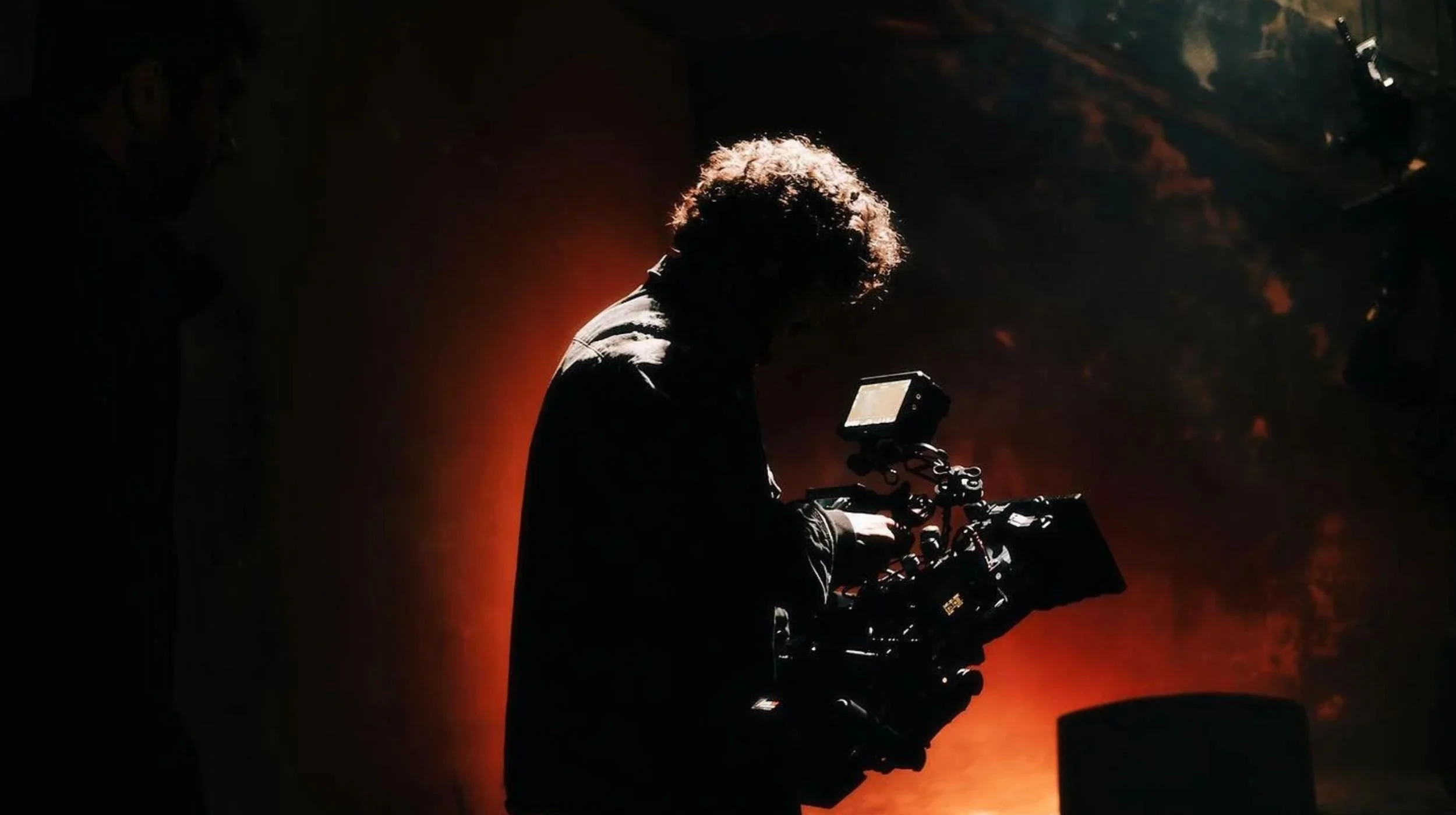
Discover five startup lessons from A24 on brand loyalty, bold marketing, creative partnerships, and scaling without losing your identity.
Three weeks before it opened, early tracking had Backrooms pegged for a $20 million opening weekend, according to Deadline. It was a horror movie from a first-time director, adapted from a series of found-footage videos on YouTube, and it cost roughly $10 million to make. The director, Kane Parsons, had started posting those videos under the name Kane Pixels when he was 16. By the time A24 released the film on May 29, 2026, he was 20.
It opened to $81.4 million in the United States and $118 million worldwide. That was more than triple A24's previous opening record, set by Civil War in 2024, and it made Parsons the youngest director ever to have the number-one movie in the country. Deadline reported that 87% of the opening audience was under 35, a group Hollywood has spent years trying and mostly failing to bring back to theaters. Six days later the film passed $100 million domestically, the first A24 release ever to do so. It has since earned more than $400 million worldwide, making it the most successful film the studio has ever released.
Three weeks after that opening, Google announced it would invest roughly $75 million in A24 as part of a research partnership with its DeepMind AI lab. In August, A24 released Tony, its film about a young Anthony Bourdain, and in the same year it shut down a documentary division that did not fit its plans. A company that is now 14 years old, valued at $3.5 billion in its last funding round, and backed by one of the largest technology companies in the world is still making bets most studios would never make.
When we first wrote about A24, we argued that it had borrowed the startup playbook and that startups should borrow it back. Eighteen months later, the argument is stronger, and more complicated. A24 has shown the playbook works at a scale few expected. It is also showing how hard it is to keep running that playbook once you have won.
A24 evolved the system instead of fighting it
Evolution. Discipline. Advantage.
A24 kept the parts of the studio model that worked and rebuilt the rest. That choice let a small team focus its energy on taste, talent, and marketing instead of on fighting the industry. Over time, that focus became an advantage the larger studios could not copy.
The company was founded in August 2012 by Daniel Katz, who had led the film finance group at Guggenheim Partners; David Fenkel, a co-founder and president of the independent distributor Oscilloscope; and John Hodges, who had been head of production and development at Big Beach. Guggenheim Partners provided the seed money, and the name came from the Italian A24 motorway Katz was driving on when he decided to start the company. Hodges left A24 in 2018. Katz and Fenkel still lead it.
Their founding idea is the one worth keeping. There are three ways to change an entrenched industry: fight it head-on, ignore it and build something separate, or evolve it from within. A24 chose the third. It distributed films through the same theaters and streaming partners as everyone else, but it chose different films, marketed them differently, and spent money differently.
What startups can borrow back from A24
Five lessons from a $3.5 billion studio that still acts small.
-
Constraint. Focus. Speed.
Small teams make faster, braver bets.
2026 proof: Backrooms cost under $10 million and took $118 million worldwide in its opening weekend.
-
Worldview. Belonging. Loyalty.
A worldview builds loyalty campaigns cannot.
2026 proof: about half the opening audience came because the film was from A24.
-
Outsiders. Conviction. Categories.
Outsiders are where new categories come from.
2026 proof: the director’s YouTube series had passed 100 million views when A24 signed him at 17.
-
Community. Story. Reach.
Earned attention beats bought attention.
2026 proof: the other half of the opening audience were fans of the YouTube series.
-
Capital. Partnership. Independence.
Partner without giving up who you are.
2026 proof: Google’s roughly $75 million deal is non-exclusive and gives no access to A24’s film library.
The hard part
Keep acting small long after you’ve become big.
Sources: TheWrap, February 2023; Deadline, May 31, 2026; The Wall Street Journal, via TheWrap, June 22, 2026; Screen Daily, June 22, 2026. A24’s $3.5 billion valuation is from its 2024 funding round.
1. Small teams make faster, braver bets
Constraint. Focus. Speed.
A small budget forces a team to choose what really matters. That focus produces faster decisions and clearer ownership. Speed, in turn, lets a company act on opportunities before bigger competitors finish their meetings.
Backrooms is the clearest recent example. A24 and its co-financier, Chernin Entertainment, made the film for roughly $10 million, according to Variety. That constraint shaped how it was made and how it was marketed, and it meant the film was profitable within its first week. A24 has also shown it will cut what does not fit. The studio closed its documentary division in 2025, according to Deadline, even while it was producing successful documentaries.
Amazon's well-known "two-pizza team" rule, which keeps teams small enough to feed with two pizzas, comes from the same instinct. Many startups do the opposite. They hire ahead of product-market fit (the point where a product clearly meets a real need) and trade speed for a sense of security that rarely holds.
The takeaway: Treat your constraints as a design choice. A smaller budget and a smaller team force the clarity that bigger companies have to pay consultants to find.
2. A worldview builds loyalty that campaigns cannot
Worldview. Belonging. Loyalty.
A clear worldview tells people what a brand stands for before they see a single ad. That clarity turns customers into a community that feels it belongs. Belonging is what keeps people coming back when a competitor offers something cheaper or louder.
A24's logo has become a reason to buy a ticket on its own. Deadline's coverage of Backrooms noted that the studio has earned the trust of younger audiences over years of original, director-driven films, from Spring Breakers and Ex Machina to Moonlight, which won Best Picture in 2017, and Marty Supreme, which earned $96 million domestically last winter. People go to A24 films partly because they are A24 films.
Patagonia works the same way in a very different category. Its environmental commitments are part of why customers choose it, not a separate campaign layered on top. Startups that focus only on acquisition metrics, such as customer acquisition cost and click-through rates, can lose sight of this. People stay loyal to what a company stands for longer than they stay loyal to any single product.
The takeaway: Write down what your company believes that your competitors do not, and make sure your product, hiring, and marketing all reflect it.
3. Outsiders are where new categories come from
Outsiders. Conviction. Categories.
Backing people the industry overlooks gives a company access to ideas nobody else is funding. Those bets require real conviction, because they look risky until they work. When they do work, they often create categories that did not exist before.
A24 found Kane Parsons on YouTube, where his Backrooms videos had built a large and devoted audience long before any studio called. Deadline reported the series drew 224 million views across 22 videos. A24 approached him about a feature adaptation, and the film was announced in early 2023, when he was still a teenager. That is the same instinct that led A24 to back Barry Jenkins' Moonlight and Ari Aster's Hereditary, but applied to a filmmaker who came up entirely outside the traditional system.
Many of the most important companies of the last two decades, Airbnb among them, started as bets most investors passed on. The lesson for startups is not to chase strangeness for its own sake. It is to pay attention to talent and audiences that already exist outside the usual channels, because that is often where the next market is forming.
The takeaway: Look for the people who have already built an audience without your industry's permission. They have proven demand before you spend a dollar.
A24 did not find its biggest hit by outbidding other studios. It found it by noticing a 16-year-old who had already built an audience on his own.
4. Earned attention outperforms bought attention
Community. Story. Reach.
Speaking to an existing community gives a brand a story people want to share. Shared stories travel further than any media budget can push them. That reach is earned, which makes it both cheaper and more credible.
A24's early marketing was famous for stunts like the 2015 South by Southwest campaign for Ex Machina, where festivalgoers on Tinder matched with a profile that turned out to be the film's AI character. The Backrooms campaign showed a more mature version of the same idea. Deadline described A24 speaking directly to the film's existing fans on Reddit and embracing a "for us, by us" approach, and noted the studio's reputation for thrifty digital marketing. The film beat its early tracking by roughly four times.
Earned attention matters even more now than it did when we first wrote this piece, because AI search tools increasingly build their answers from what other people say about a brand rather than what the brand says about itself. The communities, reviews, and coverage that drive word of mouth are also what AI tools read. This is the core idea behind Camino5's Connected SEO approach: earned attention and search visibility are now the same system.
The takeaway: Before you buy reach, find the community that already cares about your problem and give them something worth passing along.
5. Partnerships should expand your reach without costing your independence
Capital. Partnership. Independence.
Raising capital or signing a partnership gives a company resources it could not build alone. Structured carefully, those resources expand what the company can do without changing who it is. That independence is what protects the brand people chose in the first place.
A24 has been careful about this for years, from its multi-year film deal with Apple in 2018 to a 2024 funding round led by Thrive Capital that valued the company at $3.5 billion. The Google deal in June follows the same pattern. Variety reported that the roughly $75 million investment is tied to a research partnership with DeepMind, that the deal is multi-year and non-exclusive, and that it does not give Google access to A24's film library or data. A24 Labs, the studio's technology division led by former Adobe executive Scott Belsky, will work with DeepMind's researchers on new filmmaking tools.
The deal also shows the risk. Many A24 fans objected to the partnership, and the studio responded publicly. A spokesperson told Wired that A24 does not necessarily love current AI-generated film content but would rather have "a seat at the table" in shaping the tools. That is a candid answer, and it shows how a strong brand worldview cuts both ways. The same audience that gives A24 its loyalty also holds it to its stated values.
The takeaway: Treat capital as fuel, not a finish line, and read every partnership for what it costs your independence and your audience's trust, not just what it adds to your balance sheet.
A24 by the numbers
A24 and Backrooms
Backrooms opened to $81.4 million on a budget of about $10 million. That’s more than triple A24’s previous record.
Most of its opening audience was under 35. Three weeks later, Google invested about $75 million in A24 alongside a DeepMind research partnership.
| Finding | Figure | Source |
|---|---|---|
| Backrooms at the box office | ||
| Production budget, co-financed with Chernin Entertainment | ~$10 million | Variety, June 2026 |
| Early opening-weekend tracking, three weeks before release | ~$20 million | Deadline, May 31, 2026 |
| Opening weekend in the US and Canada; $118 million worldwide | $81.4 million | Deadline, May 31, 2026 |
| Share of the opening audience under 35 | 88% | Deadline, May 31, 2026 |
| Previous A24 opening record, Civil War (2024) | $25.5 million | Variety, May 30, 2026 |
| A24 and Google | ||
| Google investment in A24, alongside a DeepMind research partnership | ~$75 million | The Wall Street Journal, via Variety and TheWrap, June 22, 2026 |
| A24 valuation in its 2024 Thrive Capital funding round | $3.5 billion | Screen Daily, June 22, 2026 |
Box office figures are studio estimates for the opening weekend of May 29 to 31, 2026. Google did not confirm the size of its investment; the figure was first reported by The Wall Street Journal.
Box office figures are studio-reported estimates and change as films continue to play.
The hard part: staying a startup after you win
Success makes the playbook harder to follow, not easier.
It would be easy to tell this story as a simple triumph, and it would miss the most useful lesson. A24 is now a $3.5 billion company with a technology division, a Google partnership, and a record-breaking franchise candidate. The Hollywood Reporter noted that A24 Labs has a team of about two dozen people, which it called a fairly large number given the studio's otherwise efficient staffing. Every one of those things makes it harder to stay small, fast, and willing to bet on a 16-year-old's YouTube channel.
The same pressure hits every startup that succeeds. Growth brings more people, more process, more investors, and more to lose. The companies that keep their edge tend to protect the conditions that created it, such as small teams on new bets, a clear worldview, and a habit of saying no, even as the rest of the company scales around them.
What this likely means over the next 6 to 18 months
Creator-born ideas and AI tools are likely to reshape who gets to compete.
Backrooms did not happen in isolation. Deadline described it as part of a year in which several YouTube creators moved into theatrical film with surprising success. If that pattern holds, expect more companies in every industry to look for talent and ideas among creators who have already built audiences online. At the same time, partnerships like A24's with DeepMind suggest that new production tools may lower the cost of making ambitious work. Both trends would favor small teams with clear taste over large teams with large budgets, which is good news for startups that are willing to act like A24 did in 2012.
If you want help mapping where your audience already gathers and how they find you, Camino5's Consumer Journey Strategy work starts there.
How to start today
Write down, in one sentence, what your company believes that your largest competitor does not. If your leadership team cannot agree on that sentence, settle it before you plan your next campaign.
List the online communities where your customers already discuss the problem you solve, and spend one week reading them before posting anything. This tells you what they care about in their own words.
Identify three creators or outsiders in your space who have built an audience without traditional backing, and consider how you might work with one of them. They have already proven there is demand.
Review your current headcount plan and ask which new roles you could delay by narrowing your focus instead. Every role you do not add keeps your team faster.
Before signing your next partnership or funding term, write down what it would cost you in independence and in customer trust if it went badly. If the answer worries you, renegotiate before you sign.
A24's lesson for startups was never to be strange for its own sake; it was to stay close to the people who care most, and to keep acting small long after you have become big.
Sources
Deadline, "Backrooms $81M U.S., $118M WW A24 Record Opening," May 31, 2026
Deadline, "How Backrooms Blew The Doors Off The Box Office With $118M WW Opening," May 2026
Deadline, "Backrooms Crossing $100 Million Today, A Domestic Box Office First For A24," June 3, 2026
Variety, "Backrooms Crosses $100 Million in 6 Days," June 2026
Backrooms (film), worldwide box office total, accessed October 21, 2026
Variety, "Google Invests $75 Million in A24 to Develop AI-Powered Filmmaking Tools," June 22, 2026
TheWrap, "Google Invests $75 Million in A24 for New AI Partnership," June 22, 2026
Screen Daily, "Google strikes AI partnership with A24," June 22, 2026
The Hollywood Reporter, "A24 and Google DeepMind to Form an AI Venture," June 22, 2026
Deadline, "A24 Defends Google AI Partnership," June 26, 2026
Deadline, "Former A24 Docs Chief Joins Magna Studios," October 20, 2026