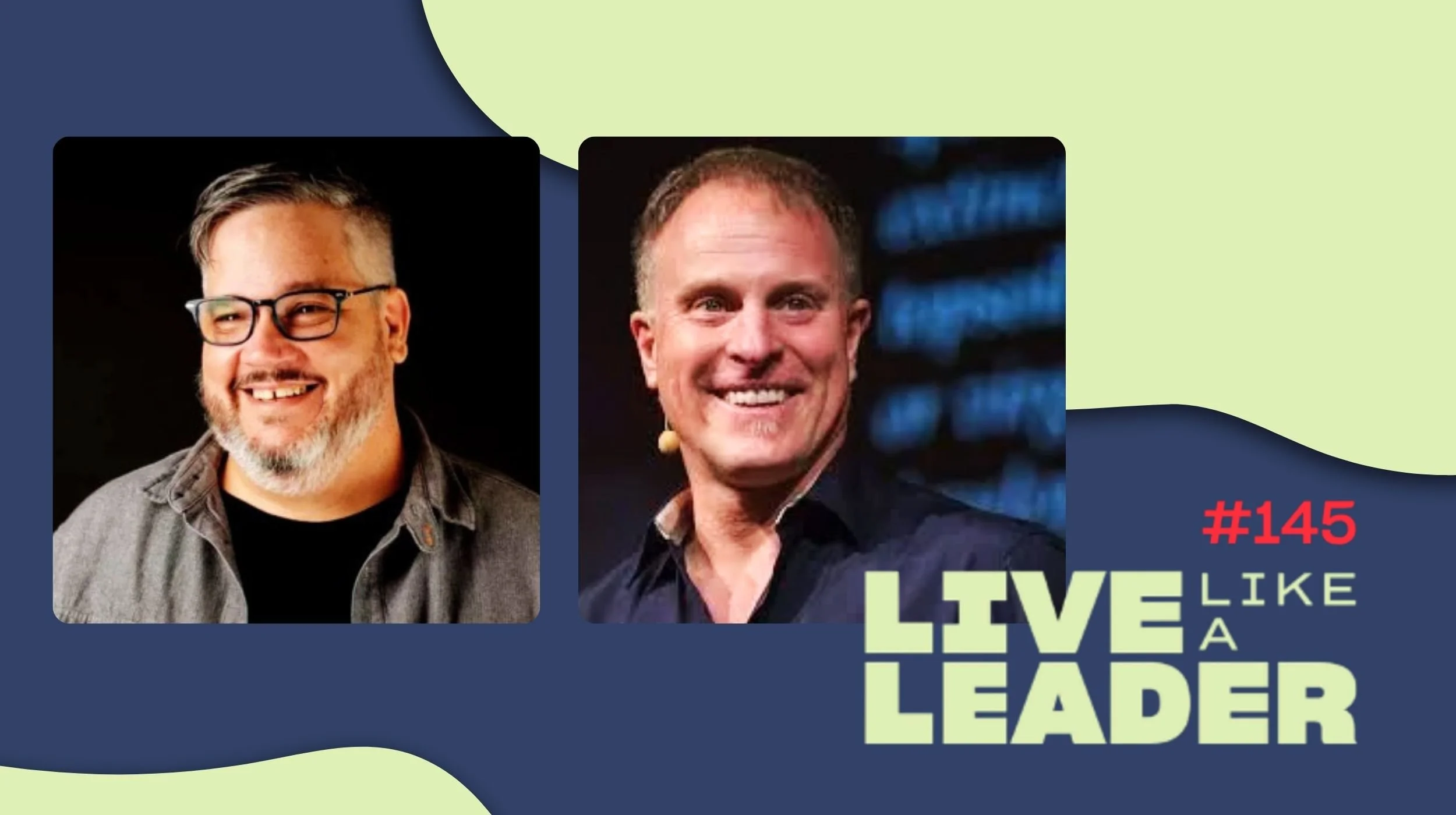
Ryan Edwards, co-founder of Camino5, explains why modern growth depends on finding moving white spaces, building a center of gravity you own, and showing up where your audience actually looks for answers.
Most companies are trying to grow in spaces that are already crowded.
They compete for the same customers, repeat the same messages, and invest in the same channels. By the time an opportunity becomes obvious, dozens of competitors are already pursuing it.
The better opportunity is often less visible.
It sits between what customers need, what the market currently offers, and what a company is uniquely equipped to deliver. That is the white space.
For Ryan Edwards, co-founder of Camino5, finding that space has been a consistent thread throughout a career spanning the early internet, digital media, global agencies, major brands, and high-growth businesses.
In a recent conversation with John Bates, Edwards explored how white-space strategy is changing, why trust has become a competitive advantage, and what businesses must understand about visibility in the age of artificial intelligence.
White space no longer stays open for long
Every company faces the same fundamental growth question: Where can we move that others have not already crowded into?
Sometimes the answer is a large, emerging market. More often, it is a narrower opportunity created by a specific combination of customer needs, product capabilities, brand credibility, and market timing.
That opportunity may not look dramatic. It may be a segment competitors have overlooked, a need they have misunderstood, or a position they are structurally unable to claim.
A decade ago, companies could conduct a white-space analysis every 12 to 18 months and expect the findings to remain useful.
That cadence no longer reflects the speed of the market.
Technology changes quickly. Customer behavior changes with it. New communities form, new expectations emerge, and people discover different ways to research, evaluate, and solve their problems.
As a result, white-space analysis is becoming a continuous discipline. Some organizations revisit it quarterly. Others monitor smaller shifts every month.
The strategic advantage is no longer simply finding an opportunity. It is recognizing when the opportunity has moved.
Growth requires continuous learning
Edwards entered the digital industry in San Francisco during the earliest days of commercial internet growth.
At the time, experience was less important than curiosity, adaptability, and a willingness to learn. That mindset carried him through work involving early digital platforms, music and radio, global agencies, major brands, and growth-stage companies.
The lesson from that trajectory is straightforward: expertise cannot become static.
Experience still matters, but it does not give senior leaders exclusive ownership of valuable insight. Someone with only a few years in an emerging field may see behaviors, tools, and cultural shifts that an industry veteran has missed.
“You don’t have to have experience to teach,” Edwards told Bates. “You just have to have a clear, articulated point of view and an open mind to have a conversation around it.”
That has become especially important as AI reshapes marketing, search, content, and customer discovery.
The strongest leaders are not those who already have every answer. They are the ones who can distinguish enduring principles from outdated practices, then keep learning quickly enough to act on the difference.
Trust is becoming a strategic opening
For much of the recent market cycle, organizations and consumers appeared to be operating defensively.
Decisions were delayed. Spending tightened. Buyers focused less on long-term value and more on immediate affordability. Uncertainty influenced everything from search behavior to sales conversations.
Now, Edwards sees a cautious shift.
People may not believe that every problem has been solved, but they appear more willing to improve the parts of their lives and businesses they can control. That change does not signal unrestricted growth. It suggests a gradual return of agency.
It also creates an opening for companies that can earn trust.
Large organizations often compete through scale, broad feature sets, and market dominance. Mid-sized businesses can compete differently. They can be more specific, more responsive, and more credible to a defined group of customers.
The message is not, “We can do everything.”
It is, “We understand what you need, and we are built to serve it.”
For a mid-market company, that may mean acknowledging that it does not intend to become a $10 billion conglomerate. Its ambition may be to become a highly focused $100 million company that serves a particular market better than anyone else.
That positioning can become a powerful white space when buyers are looking for proximity, relevance, and trust instead of scale alone.
Search no longer begins and ends with Google
For years, digital visibility revolved around one central question: What does Google think of your website?
That question still matters, but it is no longer sufficient.
People now discover businesses through search engines, social platforms, podcasts, video, media coverage, online communities, and AI tools. A buyer may encounter an expert on LinkedIn, watch a YouTube clip, read an article, and later ask ChatGPT or Perplexity who they should contact.
Each signal contributes to a broader picture of authority.
This is why some marketers have begun moving beyond the traditional language of search engine optimization. The emerging challenge is not simply ranking a webpage. It is creating enough consistency across credible sources that both people and machines understand who you are, what you know, and where you add value.
That does not mean publishing indiscriminately across every channel.
It means building a clear and connected presence across the places that influence your audience’s decisions.
Social platforms are rented, not owned
A large following can create the illusion of ownership.
But a LinkedIn profile, Instagram audience, or YouTube channel is not an owned asset in the same way as a website, customer database, or email list. Access depends on another company’s policies, algorithms, moderation systems, and business priorities.
Edwards experienced that vulnerability after publishing a lighthearted post about how AI helps him manage dyslexia. A complaint led to a sharp reduction in the reach of his LinkedIn posts while he worked to resolve the issue.
The incident reinforced a fundamental principle: audiences built on social platforms are rented.
A platform can reduce distribution, restrict access, change its algorithm, or alter its rules with little warning. A business that depends entirely on one social channel is accepting a risk it does not control.
This does not make social media unimportant. LinkedIn, in particular, remains a valuable environment for professional visibility and relationship building.
It does mean that every business needs a center of gravity.
Build a center of gravity you control
A company’s center of gravity is the place where its authority, content, relationships, and demand ultimately converge.
For most businesses, the strongest option is a website.
A website provides control. It gives a company a permanent place to explain its value, publish its ideas, capture demand, and connect the different signals that shape modern discovery.
Social posts can point toward it. Media mentions can reinforce it. Podcast appearances can expand it. Search and AI systems can use it to understand the business more clearly.
Some creators may choose a social platform as their primary center of gravity and succeed. But they should do so with a clear understanding of the tradeoff.
The goal is not to abandon rented channels. It is to ensure that the business is not structurally dependent on them.
Do not be everywhere. Be everywhere that matters.
One of the most persistent ideas in modern marketing is that brands need to be everywhere.
The problem is that attempting to be everywhere often produces fragmented execution, inconsistent messaging, and shallow engagement. Teams spread their resources across channels without understanding which ones actually influence their customers.
As Edwards put it, “If you’re everywhere, you’re often nowhere.”
The more useful principle is this:
Be everywhere that matters to the people you are in the business of helping.
That distinction changes the strategy.
It shifts the focus from channel volume to audience relevance. It asks where customers learn, what they trust, how they evaluate options, and which sources shape the final decision.
A professional-services firm may need a strong website, LinkedIn presence, expert articles, podcast appearances, and short-form video. Another business may find that its customers rely more heavily on YouTube, industry communities, or earned media.
The right channel mix is not determined by what is popular. It is determined by how the audience behaves.
Modern visibility is a connected system
AI has not eliminated the need for a strong brand foundation. It has made that foundation more important.
Businesses still need a clear position, useful expertise, credible proof, and a destination they control. What has changed is the number of places where those signals are discovered and interpreted.
The companies that benefit most will not be those that publish the most content or chase every emerging platform.
They will be the ones that connect their presence around a coherent point of view.
They will understand the white space they can credibly occupy. They will keep learning as that space changes. They will earn trust through relevance and consistency. And they will invest in the channels that matter without confusing visibility with ownership.
In the AI era, the goal is not omnipresence.
It is strategic presence, anchored by something you control.
Hear the full conversation with John Bates and Ryan Edwards tomorrow.
Follow John Bates: [JOHN BATES SOCIAL PROFILE PLACEHOLDER]
Follow Camino5: [CAMINO5 SOCIAL PROFILE PLACEHOLDER]
Podcast link: [PODCAST LINK PLACEHOLDER]