
The Content Marketing Rules That AI Can’t Change: Stop Selling Solutions. Start Selling Problems.

The Common Content Mistake
Have you ever poured your energy into creating content, posting consistently for months, only to hear crickets? It's a common frustration: you're creating valuable videos, articles, or social media posts, but nobody's watching, reading, or engaging. The cause is often a simple but profound mistake in strategy.
The most effective content doesn't lead with impressive credentials, lists of features, or bold promises of a solution. Instead, it begins by proving a deep, almost empathetic understanding of the audience's problem. This article will break down two powerful strategies that shift the focus from your solution to their problem, earning you the attention and trust required to make an impact.
1. The First Step: Prove You Understand with "Problem Match"
What is "Problem Match"?
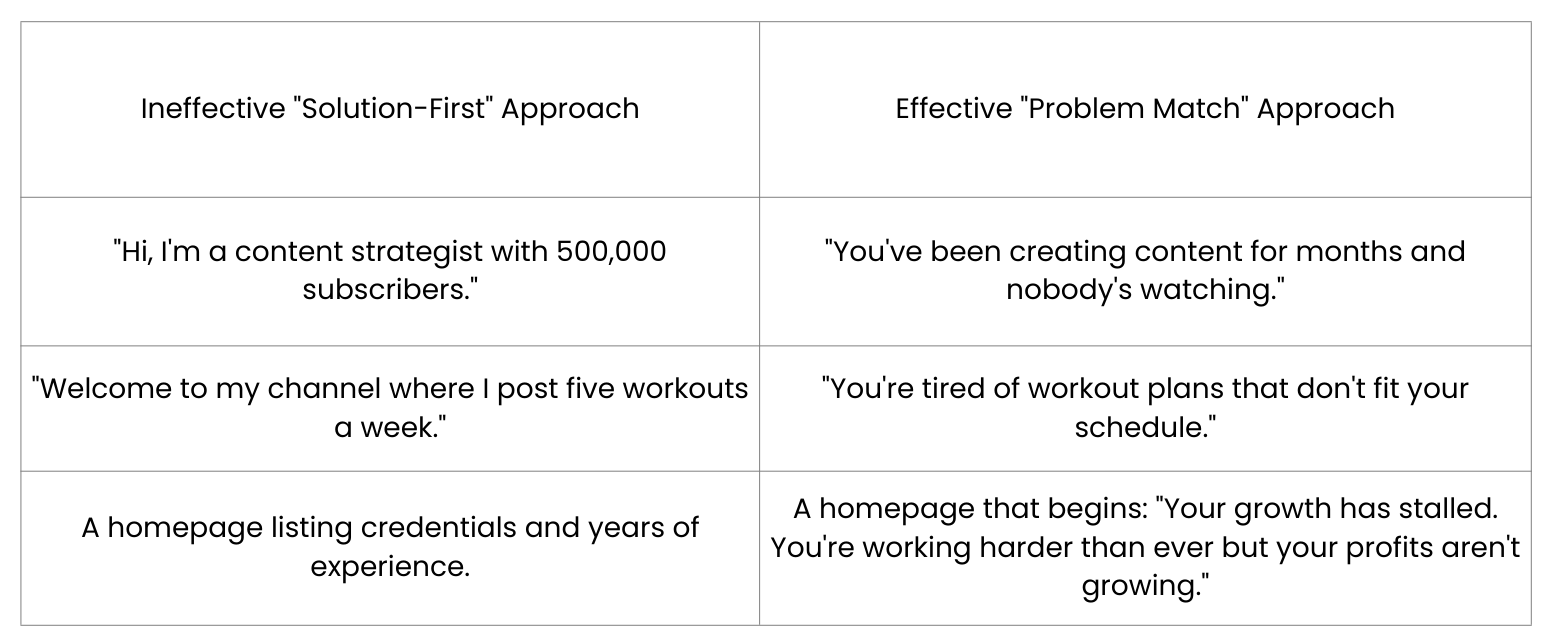
"Problem Match" is the strategy of mirroring your audience's specific problem back to them, using their exact language, before you mention any solutions, credentials, or products. It is the critical first step in communication that makes your audience feel seen and understood. Instead of leading with why you're qualified, you lead by demonstrating that you grasp the pain they are experiencing right now.
Why Does This Work?
The psychological impact of Problem Match is immediate and powerful. When you accurately describe someone's struggle, their internal response shifts from skepticism to recognition. They think, "Okay, this brand gets it. They understand what I'm going through." In a world saturated with content, this feeling of being understood is what breaks through. Without it, every solution you offer, every credential you list, and every feature you describe is just noise.
How to Apply It
You can implement this strategy by following a few key steps:
Use Their Exact Language: Avoid corporate speak or expert jargon. If your audience describes their feeling as "overwhelmed," use that word. Don't translate it into "resource allocation challenges." Listen to how they speak and use those same words.
Make it the First Thing: The problem statement must appear at the very beginning of any piece of content, the first sentence of a video, the headline of an article, or the opening text on your homepage. It's the hook that earns you the right to say anything else.
Test and Refine: Share your problem statement with people in your target audience. Watch their reaction. You are looking for an immediate, visceral agreement. The goal is to refine it until their response is, "Yes, exactly that."
Once you've shown that you understand the problem, the next step is to amplify its importance and create a sense of urgency.
The Next Level: Create Urgency with the "Mega Mouse Trap"
What is the "Mega Mouse Trap"?
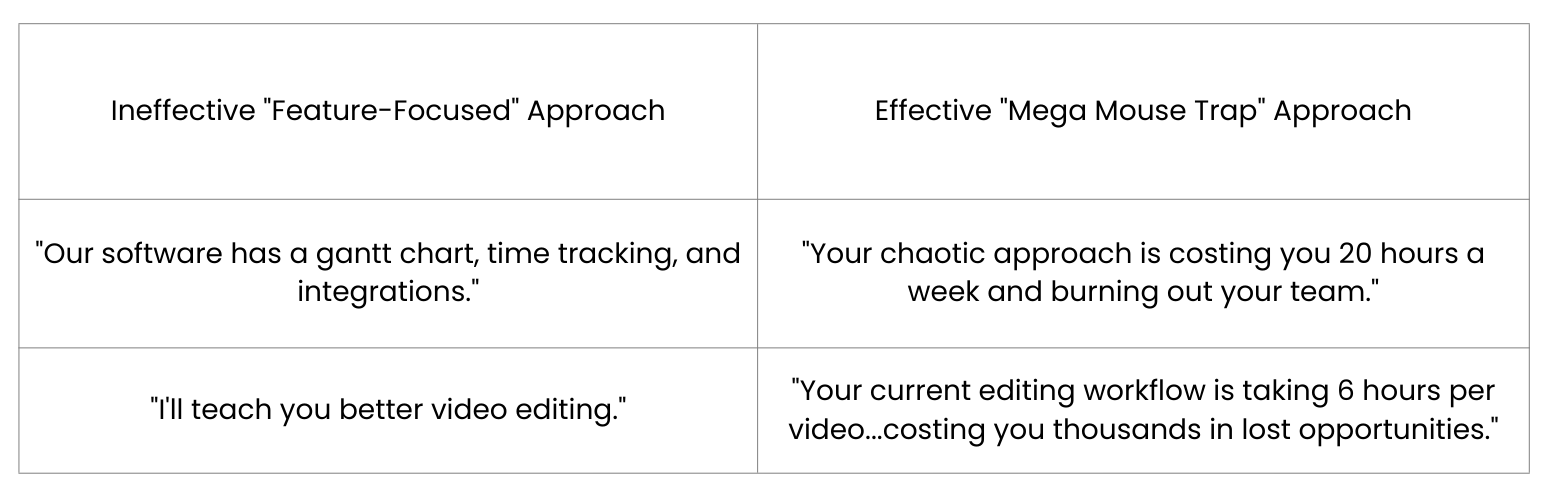
An old principle in marketing states: "Don't sell a better mousetrap; sell a bigger, scarier mouse." This powerful analogy is the core of the "Mega Mouse Trap" strategy. It means that people are rarely motivated to act by a slightly better solution. They are motivated to act when they realize their current problem is far more painful than they thought that it’s actively costing them, burning them out, and, in the words of direct response copywriters, that the problem is "killing them." Your job isn't just to state the problem, but to agitate it.
Why Does This Work?
The modern consumer is numb to claims of being "better, faster, cheaper." Everyone says it. Agitating the problem, however, breaks through this numbness. By focusing on the pain, fear, and the downstream consequences of inaction, you make the problem impossible to ignore. This makes your audience stop and think, "This is me. I need to pay attention." It creates the necessary tension that makes them actively seek a solution.
How to Build Your "Mouse"
Building your "Mega Mouse Trap" involves a three-step process of exploration and framing:
Expand on the Problem: Start with the core problem you solve, and then explore its hidden costs. What downstream effects are they ignoring? What happens in 6-12 months if this problem remains unresolved? Quantify the cost in time, money, or well-being.
Find a Villain: People need something to blame, but it shouldn't be themselves. Instead, blame a flawed system, a broken industry standard, or a harmful myth. For example, a productivity coach can blame "the hustle culture myth" for burnout rather than blaming an individual's work ethic. This positions you as an ally against a common enemy.
Showcase Failed Solutions: Acknowledge the common solutions your audience has likely already tried and explain why they didn't work. This validates their past struggles and positions your approach as the one that finally addresses the true, underlying issue.
The Path to Effective Content
Creating content that resonates doesn't start with you; it starts with them. Problem Match earns you the right to be heard by building a foundation of trust, while the Mega Mouse Trap creates the urgency for them to listen by revealing the true cost of their inaction. Together, they form a sequence that moves an audience from skepticism to attention, and finally to action.
To create content that truly connects and converts, you must master the art of articulating your audience's problem better than they can themselves.
Ryan Edwards, CAMINO5 | Co-Founder
Ryan Edwards is the Co-Founder and Head of Strategy at CAMINO5, a consultancy focused on digital strategy and consumer journey design. With over 25 years of experience across brand, tech, and marketing innovation, he’s led initiatives for Fortune 500s including Oracle, NBCUniversal, Sony, Disney, and Kaiser Permanente.
Ryan’s work spans brand repositioning, AI-integrated workflows, and full-funnel strategy. He helps companies cut through complexity, regain clarity, and build for what’s next.
Connect on LinkedIn: ryanedwards2