
From Funnel to Loop: The Map Was Never the Territory
Key Takeaways
The funnel is a sales-era map of volume, mistaken for how individuals actually buy.
Buyers loop between exploring and evaluating across about ten channels, not down neat stages.
Brand is the one asset that works at every turn of the loop.
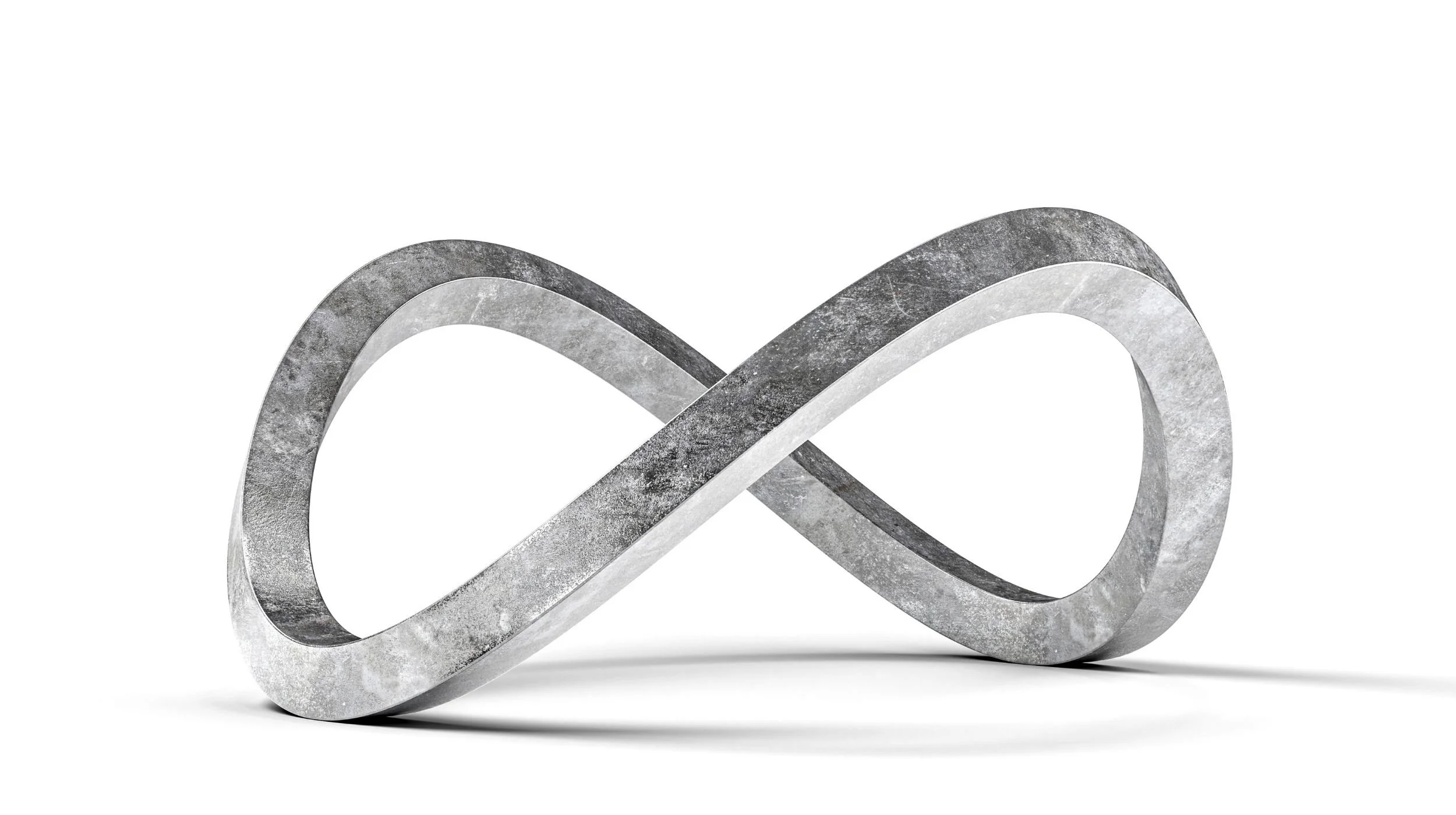
The buyer's journey was never a funnel. It is a loop, and the AI era finally makes that impossible to ignore.
For more than a hundred years, marketing has been drawn as a funnel. Wide at the top, narrow at the bottom. Awareness, then consideration, then intent, then a sale.
You have probably drawn it yourself. On a whiteboard. In a deck. In a budget.
It feels true.
It is not.
The funnel is one of the most durable ideas in business. It is taught in every marketing class. It shapes every org chart. It decides where the money goes. And in all that time, it has never described how a single human being actually buys.
Real buyers do not slide down a funnel. They wander. They get curious, lose interest, and come back a week later. They decide, then change their minds. They read the fine print before they have ever heard of you, then circle back to the basics. They skip steps. They repeat steps. They do the bottom of the funnel before the top.
The funnel is a tidy drawing laid over a messy truth. For a long time, the drawing was close enough to be useful. That time is ending.
The funnel was a sales aid, not a study of people
Here is the part we forgot. The funnel was never meant to explain how a person thinks.
The idea comes from a sales formula written in the 1890s. It was a way to picture how a big pool of prospects narrows toward a smaller pool of buyers. It described a process, in total, across many people. It was a model of flow, not a model of a mind.
Then we made a quiet mistake. We started treating the picture as the person. We acted as if each buyer really did march, in order, from awareness to purchase. We built teams around that march. We split budgets by its stages. We mapped every piece of content to a step on the line.
The buyer was looping the whole time. We just kept drawing them descending.
So the AI era did not break the funnel. It revealed that the funnel was never accurate to begin with.
The loop is what was always there
A few years ago, Google studied how people actually decide. It called the space between the first spark of interest and the final purchase the messy middle.
In that middle, Google found, buyers do two things over and over. They explore, opening up their options. Then they evaluate, narrowing those options down. Then they explore again. They loop between the two until they feel sure enough to buy.
That is not a funnel. There is no smooth slide through stages. There is a buyer circling between two modes, exploring and evaluating, until trust is high enough to stop.
The numbers tell the same story.
McKinsey reports that business buyers now use about ten channels to research suppliers and make decisions. In 2016, that number was closer to five. The journey did not get more linear. It got wider and more tangled.
Salesforce finds the same pattern with everyday customers, who use around nine channels to browse, ask, and buy. And more than three quarters of customers say they expect a consistent experience no matter which channel they are in. They do not see your departments. They see one brand, and they jump between channels as they please.
HubSpot's research adds the last piece. Most buyers want to do their own research before they ever speak to a salesperson. By the time they reach out, they have already been looping on their own, often for a long while.
Every modern data point describes the same thing. Buyers loop. They do not descend. The funnel does not fit, because people were never built to move through it.
Why AI widens the gap
For a century, the funnel was wrong but workable. AI is what makes it unworkable.
Think about what an AI assistant lets a buyer do. They can fold awareness, consideration, and intent into one conversation. They can start at the bottom, asking for a specific recommendation, then work backward to learn the basics. They can loop through an assistant's answers ten times in a single sitting, comparing, doubting, asking again.
Picture a real buyer. She asks an assistant for the three best tools for her problem. She gets names she has never heard of. She asks why one is better than another. She asks about price. She leaves, thinks about it, comes back the next day, and asks the same question a different way. She never saw an ad. She never filled a form. She never touched a stage on anyone's chart. She looped, quietly, until she was sure.
When the journey can collapse into one chat, or run backward, or spin in tight circles, the funnel does not just simplify reality. It misleads. And a business organized around a misleading map will spend its money in the wrong places. It will staff the wrong teams. It will measure the wrong things.
The myth was tolerable when it was roughly right. It is expensive now that it is clearly wrong.
What the loop changes
Moving from funnel to loop is not a new coat of paint. It changes the work.
The funnel implies sequence. Fill the top, then push people down. The loop implies presence. Be useful and convincing in both modes, exploration and evaluation, at all times, because you can never be sure where a buyer is. Someone who looks like they are just starting to explore may have already evaluated you twice.
The funnel implies stage metrics. Count people moving from one step to the next. The loop implies presence-and-trust metrics. Are you showing up in both modes? Are you known and trusted across the whole loop? Are you on the short list? Are you in the AI's answer? There are no clean stages to convert between, so you measure presence and trust instead.
The funnel implies stage-based teams and budgets. A top team, a bottom team, money split by layer. The loop implies organizing around the whole journey. Build the things that serve exploring and evaluating, and spend to stay present and trusted across all of it.
The org chart should follow the buyer. Not the diagram.
The belief at the center
Here is the simple, true point underneath all of it.
In a loop with no clear entry and no orderly path, one thing gives you an edge at every turn. A brand the buyer already knows and trusts.
The funnel quietly downgraded brand. It imagined you could catch people stage by stage, so brand became a nice-to-have at the top while the real work happened lower down. The loop turns that on its head. When there are no tidy stages to catch, the buyer who already trusts you is leaning your way wherever they happen to be.
Simon Sinek put it plainly. "People don't buy what you do; they buy why you do it." In a loop, the why travels with the buyer through every turn. The what is just the thing they pick once the trust is there.
Seth Godin defines a brand as "the set of expectations, memories, stories and relationships that, taken together, account for a consumer's decision to choose one product or service over another." Read that again with the loop in mind. Expectations. Memories. Stories. Relationships. Those are not stage tactics. They are the things that work across a whole journey, at any point, in any order.
That is why brand demand, share of search, and a spot on the day-one short list matter so much. They are the assets that work in a loop. Funnel tactics assume a buyer at a known stage. Brand assumes nothing, and helps everywhere.
You do not have to burn the word "funnel"
One honest note, because it lowers the cost of change.
The funnel will not vanish from our vocabulary, and it does not need to. As a picture of volume, of how a large pool narrows to a smaller one in total, it is fine. The error is using it as a map of how one person decides, and then building the whole company around that fiction.
So hold the funnel loosely. Keep it as a rough picture of the numbers if it helps you talk to your board. Just stop letting it run your strategy as if buyers really walked its stages in order.
Organize the work around the loop. Keep the word if you like the word. You will act on how people really behave while still speaking a language your board understands. That is how you retire a myth without picking a fight you do not need.
The funnel told you where buyers should go. The loop shows you who you need to be when they get there, again and again.
What you can do
Redraw the journey as a loop. Replace the funnel diagram with a loop between exploring and evaluating, and share it with your team.
Show up in both modes, always. Stay useful and persuasive while buyers explore and while they evaluate, because they move between the two without warning.
Measure presence and trust. Trade stage-to-stage conversion for signals like brand recognition, short-list presence, and showing up in AI answers.
Fund the whole loop. Move budget away from separate top and bottom teams toward capabilities that serve the entire journey.
Invest in brand. Build the trust that helps everywhere, and track share of search and day-one short-list presence as proof it is working.